The U.S. immigration system can feel like an impossible maze, especially when your ability to remain in the country is controlled by an abusive family member. For many, the fear of deportation is a powerful tool used by an abuser to maintain control, creating a cycle of fear and dependency. The reality is that immigrant women face a significantly higher risk of domestic violence; lifetime rates of abuse by intimate partners range up to 93% in some immigrant groups, compared to U.S.-born women.
Acknowledging the Courage to Seek Help
Making the decision to seek help is an act of immense courage. The Violence Against Women Act (VAWA) recognizes this bravery by creating a safe and confidential pathway for victims of abuse to secure their own immigration status, independent of their abuser. This guide is designed to explain how VAWA works and how it can provide a route to safety, stability, and a new beginning.
What is the Violence Against Women Act (VAWA)?
VAWA is a landmark piece of U.S. immigration law that allows certain abused spouses, children, and parents of U.S. citizens and Lawful Permanent Residents (LPRs) to file for their own Green Card without their abuser’s knowledge, consent, or participation. It breaks the chain of control that abusers often use to manipulate their victims’ immigration status.
Your Path to Independence and Legal Status
The core principle of VAWA is empowerment. It provides a way for you to take control of your immigration journey, offering not just a path to lawful permanent residence but also access to benefits like a work permit along the way. It ensures that no one has to choose between staying in an abusive relationship and being forced to leave the country.
What is VAWA and How Does Self-Petitioning Work?
Understanding the foundation of VAWA is the first step toward reclaiming your future. This law was specifically designed to address a critical vulnerability within the family-based immigration system, where an abuser could wield immense power over a victim’s life.
VAWA’s Origin and Congressional Intent
Originally passed in 1994, the Violence Against Women Act was created by Congress to protect victims of domestic violence, sexual assault, and stalking. Its immigration provisions were revolutionary because they acknowledged that an abuser’s control over a family-based immigration petition was a significant barrier to a victim’s safety. Many undocumented immigrants experiencing intimate partner violence are less likely to call the police or seek help, fearing it could jeopardize their status. VAWA was enacted to remove that fear.
Understanding the VAWA Self-Petition
The most powerful tool VAWA provides is the ability to “self-petition.” In a typical family-based immigration case, the U.S. citizen or permanent resident spouse files a petition on behalf of their foreign national family member. Under VAWA, you, the survivor of abuse, can file this petition for yourself using Form I-360. This means you do not need your abuser to sign any forms, attend any interviews, or even know that you are applying for immigration relief. The entire process is confidential.
Who Qualifies for VAWA Immigration Relief? Key Eligibility Requirements
VAWA has specific eligibility criteria to ensure its protections reach the intended individuals. Meeting these requirements is crucial for a successful self-petition.
Eligible Relationships and Abuser’s Status
To be eligible for VAWA as a battered spouse or child, you must demonstrate a qualifying relationship with the abuser. The abuser must be either a U.S. citizen or a Lawful Permanent Resident (Green Card holder). Eligible relationships include:
- Spouse: You are currently married to, or were married to, a U.S. citizen or LPR abuser. If divorced, you generally must file within two years of the divorce, provided there’s a connection between the abuse and the termination of the marriage.
- Child: You are an unmarried child under 21 who has been abused by your U.S. citizen or LPR parent.
- Parent: You are the parent of a U.S. citizen child who has been abused by that child. (Note: This guide focuses primarily on spouses and children).
The Definition of Abuse: Beyond Physical Violence
A critical aspect of VAWA is its broad definition of abuse. It is not limited to physical violence. USCIS recognizes that abuse can take many forms, including:
- Emotional and Psychological Abuse: This includes threats, intimidation, isolation from friends and family, degradation, and manipulation.
- Financial Abuse: Controlling all financial resources, preventing you from working, or forcing you to account for every penny.
- Sexual Abuse: Any form of coerced sexual contact.
- Immigration-Related Abuse: Threatening deportation, destroying immigration documents, or refusing to file for your legal status.
This wide-ranging definition is vital, as the impact of abuse on children is profound. Globally, 1 in 4 children live with mothers experiencing intimate partner violence, showing how abuse within a household affects all family members.
Other Crucial Eligibility Criteria
In addition to the relationship and abuse requirements, you must also prove:
- Good Faith Marriage (for spouses): You entered the marriage genuinely and not solely for immigration benefits.
- Shared Residence: You lived with the abuser at some point.
- Good Moral Character: You can demonstrate you are a person of good moral character, typically proven through a lack of significant criminal history.
Navigating the VAWA Self-Petition Process: A Step-by-Step Guide
The VAWA process is detailed but manageable. Understanding the key steps can help demystify the journey and prepare you for what lies ahead.
Preparing Your Application: Gathering Critical Evidence
A strong VAWA petition is built on solid evidence. The burden of proof is on you to show that you meet all eligibility requirements. Evidence can include:
- Proof of Abuser’s Status: A copy of their passport, birth certificate, or Green Card.
- Proof of Relationship: Marriage certificate, birth certificates of children, joint financial documents, photos.
- Proof of Abuse: This is the most critical component. It can include police reports, court orders, medical records, photos of injuries, journal entries, and sworn affidavits from friends, family, clergy, or social workers who witnessed the abuse or its effects.
- Proof of Good Moral Character: Police clearance letters from every jurisdiction you have lived in for six months or more in the last three years.
Filing Form I-360, Petition for Amerasian, Widow(er), or Special Immigrant
This is the central form for your VAWA self-petition. It must be filled out completely and accurately, accompanied by all your supporting evidence and a personal declaration detailing the abuse in your own words.
Protecting Your Privacy: The Ironclad Confidentiality Rule
Federal law mandates strict confidentiality for all VAWA cases. USCIS is legally prohibited from sharing any information about your case with your abuser or other third parties without your consent. This protection is designed to ensure your safety throughout the process.
Applying for Work Authorization (EAD)
Once your VAWA self-petition (Form I-360) is approved, or in some cases while it is pending, you may be eligible to apply for a Work Permit, also known as an Employment Authorization Document (EAD), by filing Form I-765. This allows you to work legally in the U.S. and is a vital step toward financial independence.
Adjusting Your Status to a Green Card (Form I-485)
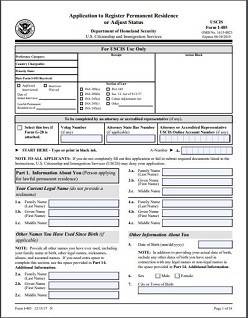
An approved I-360 petition does not automatically grant you a Green Card. It establishes your eligibility to apply for one. The next step is filing Form I-485, Application to Register Permanent Residence or Adjust Status. This can often be filed concurrently with the I-360 if an immigrant visa number is immediately available.
What to Expect: USCIS Review and Potential Interview
After filing, USCIS will review your petition. They may issue a Request for Evidence (RFE) if they need more information. An interview may or may not be required. If an interview is scheduled, a USCIS officer will ask questions to verify the information in your application.
After VAWA Approval: Your Path to Stability and Permanent Residency
Receiving an approval notice for your VAWA petition is a monumental step. It signifies that you have successfully established your eligibility and are on the path to securing your future in the U.S.
Receiving Your Prima Facie Determination and Green Card
Shortly after you file your I-360, you may receive a “Prima Facie Determination Notice.” This is not an approval, but it can be used to access certain public benefits while your case is pending. After your I-360 is approved and your I-485 is processed, you will become a lawful permanent resident and receive your Green Card. According to USCIS processing data, for those adjusting status, most VAWA-based I-485 cases take 12-24 months after the I-360 is approved.
Removing Conditions on Permanent Residency (if applicable)
If you were married for less than two years when your Green Card was approved, you will likely receive a conditional Green Card valid for two years. You will need to file Form I-751 to remove these conditions before it expires.
Rights and Benefits as a Lawful Permanent Resident
As a lawful permanent resident, you have the right to live and work anywhere in the U.S. permanently. You can travel outside the country and re-enter, sponsor other eligible family members for immigration, and are protected by all federal, state, and local laws.
Including Family Members: Derivatives
Your unmarried children under 21 can be included in your VAWA self-petition as “derivatives.” This allows them to receive the same immigration benefits as you, including a Green Card, without needing to file a separate petition.
The Journey to U.S. Citizenship
After maintaining your status as a permanent resident for the required period (typically five years, or three if you are still married to and living with your U.S. citizen spouse), you can apply for U.S. citizenship.
Other Avenues for Immigration Relief: U Visas and T Visas
While VAWA is a powerful tool, it’s not the only form of immigration relief for victims of crime or abuse. U and T visas are other important options to consider.
U Visas: Relief for Victims of Crime
The U visa is for victims of certain qualifying crimes who have suffered substantial physical or mental abuse and have been helpful to law enforcement in the investigation or prosecution of the criminal activity. This can be an option if the abuser is not a U.S. citizen or LPR, or if the abuse was part of a crime reported to the police.
T Visas: Protecting Victims of Trafficking
The T visa is for victims of severe forms of human trafficking, which can include both sex and labor trafficking. This form of relief is available to individuals who were forced into labor or commercial sex acts through force, fraud, or coercion.
Deciding Which Path is Right for You
Choosing between VAWA, a U visa, or a T visa depends on the specific circumstances of your case, including the abuser’s immigration status, the nature of the harm suffered, and whether law enforcement was involved. Consulting with an experienced immigration attorney is the best way to determine the most suitable path.
Essential Support Systems: Don’t Go Through This Alone
Navigating the VAWA process while healing from abuse is challenging. It is crucial to build a support system. This includes reaching out to domestic violence organizations for counseling and safety planning, and seeking legal counsel from a qualified immigration attorney who can guide you through every step, ensuring your rights are protected and your case is as strong as possible.
Conclusion
The Violence Against Women Act is more than just an immigration law; it is a lifeline. It provides a confidential, independent path to safety and legal status for abused spouses and children, breaking the power an abuser holds over a victim’s future. By allowing for self-petitioning, VAWA empowers survivors to seek lawful permanent residence without their abuser’s knowledge, offering a tangible route to a life free from fear. The process requires courage and careful preparation, but the end goal—a secure Green Card, the right to work, and the ability to build a new life—is achievable. If you are in an abusive situation, remember that you have rights and options. The first step is often the hardest, but by seeking help from legal and social support services, you can begin the journey toward safety, independence, and stability in the United States.